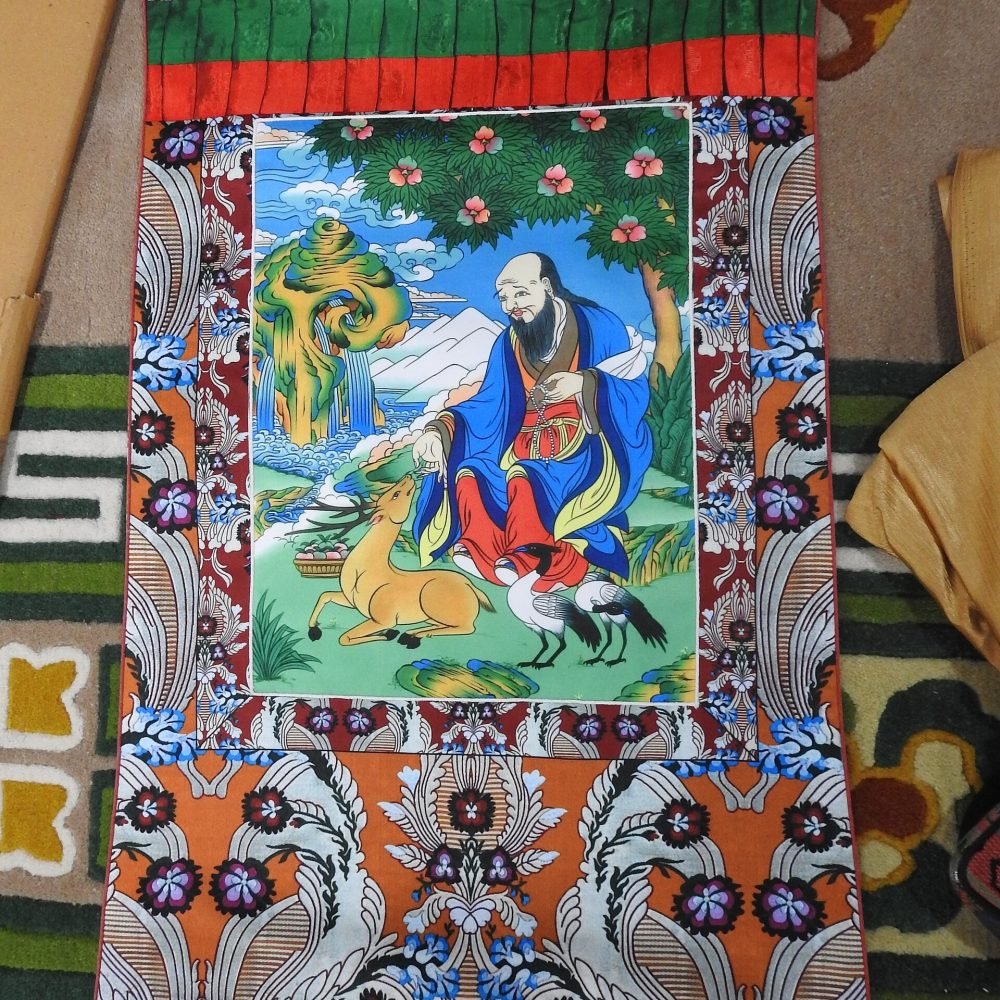
Reading a Thangka: What You Are Actually Looking At
A thangka is drawn to a fixed measurement grid before a single colour goes down. Once you know the grid exists, you can judge quality in about thirty seconds.
By Yugo Bazar · · 3 min read
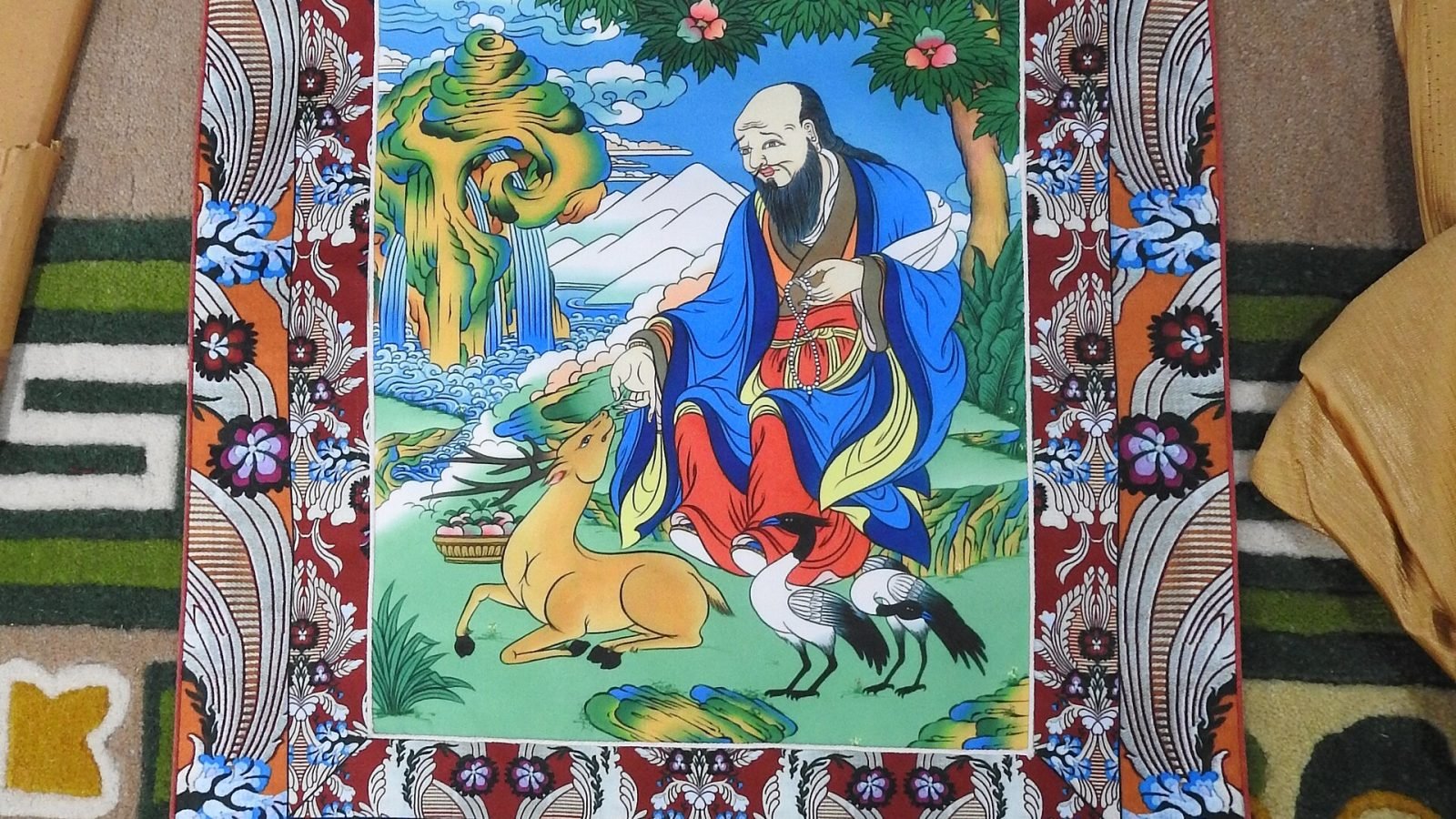
Most people look at a thangka and see something ornate and impenetrable. It is neither: it is a highly systematised diagram, and the system is learnable. Here is enough of it to buy well.
The grid comes before the picture
Thangka figures are set out on an iconometric grid before any drawing happens. The proportions are fixed by canonical texts and measured in units derived from the figure's own face-width. A seated Buddha is a specified number of units tall, the shoulders a specified width, the eyes a specified distance apart.
This is not a stylistic convention the painter may vary. It is the specification. Which is enormously useful to a buyer, because it means correctness is objective. If a Buddha's proportions look subtly wrong to you, they probably are, and that tells you the painter either did not lay the grid or could not hold it.
What to check, in order
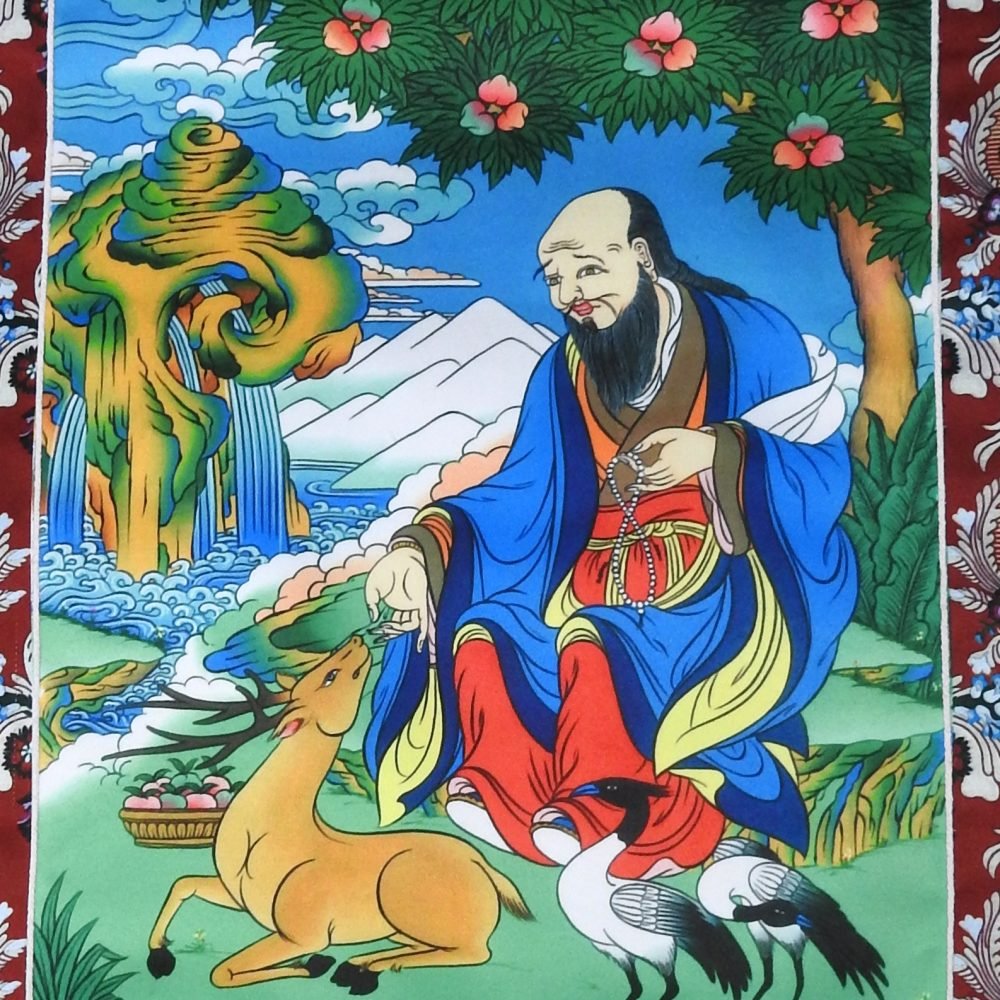
- The face. The single hardest thing to paint and the first place a weak thangka gives itself away. Look for symmetry, an even serene expression, and clean unbroken eyeline curves. Faces are usually painted last, by the most senior painter in the studio.
- The hands and fingers. Mudras are specific and fingers are hard. Muddy, fused or clumsy fingers mean a rushed piece.
- Line consistency. A finished thangka is outlined with a very fine brush at the end. That line should be even in weight over its whole length, including tight curves.
- Gold work. Real gold is applied as a paste and burnished with an agate stylus, so it sits slightly proud and has a soft directional sheen. Gold-coloured paint is flat and slightly green in raking light.
- The back. Genuine studio work is often signed or blessed on the reverse. Look at it before you commit.
Pigments, and an honest word about them
Traditional thangka pigment is ground stone in hide glue: malachite for green, azurite and lapis for blue, cinnabar for red, orpiment for yellow. These have depth that synthetic pigment does not, they cost significantly more, and they last centuries.
Most thangkas sold today use a mix of mineral and synthetic pigment. That is not a scandal — it is normal at ordinary price points, and a well-painted synthetic-pigment thangka is a better object than a badly painted mineral one. What matters is that the seller tells you which you are getting. Anyone claiming all-mineral pigment on a cheap piece is claiming something the arithmetic does not allow.
How long it takes
A simple unmounted composition: two to four weeks. A detailed deity thangka with landscape and full gold work: three months to a year, one painter. When you divide the price of a good thangka by the hours in it, the number is usually humbling.
Hanging it
Never in direct sun and never above a radiator or fireplace. Dust with a soft dry brush only — a damp cloth will lift stone pigment straight off the glue binder. If it is brocade-mounted, roll it rather than folding it when it is not on the wall, and roll it face-out over the dowel.